The Prescription You Can't Get from a Doctor: How Kanuhura Rewires the Burned-Out American Mind
The Prescription You Can't Get from a Doctor: How Kanuhura Rewires the Burned-Out American Mind
There is a particular kind of exhaustion that afflicts successful Americans — one that no amount of sleep, no spa weekend in Scottsdale, and no meditation app can fully address. It is the fatigue of perpetual availability: the relentless pull of Slack notifications, quarterly reviews, school schedules, and the ambient guilt of never quite being present wherever you happen to be standing. Psychologists have a clinical term for it. The rest of us simply call it modern life.
The question is not whether you need a genuine escape. The question is whether you are willing to go far enough to find one.
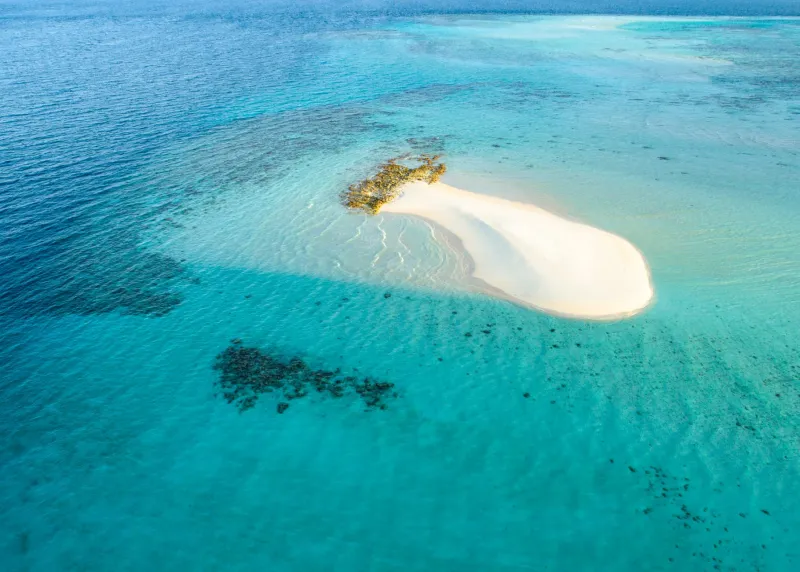
Kanuhura Maldives sits in the Lhaviyani Atoll, roughly 45 minutes by seaplane from Malé, at a remove from the ordinary world that is both geographical and psychological. It is not merely a resort. It is a private island — one of the few in the Maldives that operates with the singular purpose of ensuring that its guests experience something increasingly rare in American culture: uninterrupted time.
The Science Behind Why Distance Matters
Research published in the Journal of Environmental Psychology confirms what intuition has long suggested — physical distance from one's daily environment is a meaningful predictor of psychological restoration. It is not enough to close the laptop. The brain requires environmental novelty, reduced cognitive load, and the absence of familiar stress triggers to enter what researchers call "restorative states."
This is precisely why a long weekend at a domestic resort rarely delivers the reset that high earners are seeking. The zip code may change, but the nervous system remains on alert. True decompression, the kind that produces measurable shifts in cortisol levels and subjective well-being, tends to require a more radical departure.
Kanuhura's private island geography does something that no wellness program can manufacture: it removes the infrastructure of your ordinary life so completely that the brain has no choice but to recalibrate. There is no traffic noise, no urban ambient hum, no accidental encounter with a work colleague. There is the Indian Ocean, the wind through the palm canopy, and the specific, almost startling quality of silence that exists only in places this far from civilization.
What a Private Pool Villa Actually Does to You
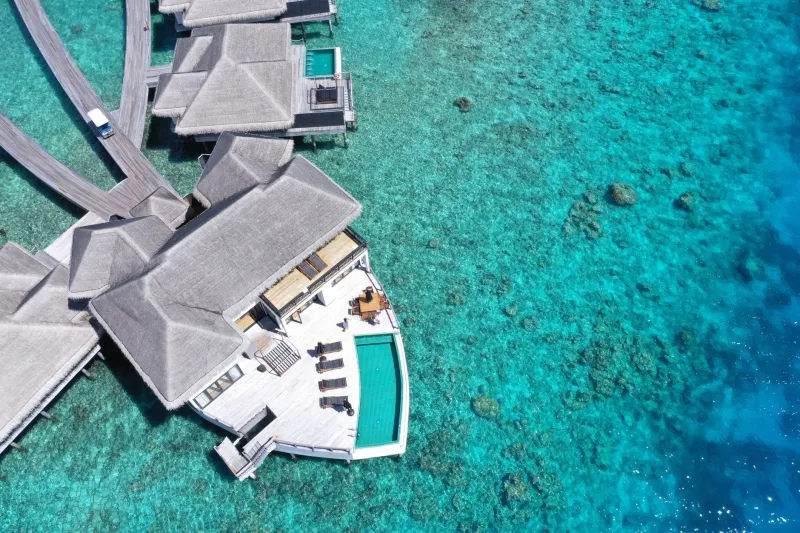
Kanuhura's accommodations are designed with an understanding of how affluent travelers actually want to inhabit space. The resort's private pool villas are not merely luxurious in the conventional sense — they are architecturally oriented toward inwardness and stillness. Each villa opens directly onto its own plunge pool, with sightlines drawn toward open water rather than toward other guests or resort amenities.
This design philosophy is intentional. When your physical environment is arranged around privacy and natural beauty rather than social performance, the psychological posture of the guest shifts. You are not on display. You are not managing impressions. You are, perhaps for the first time in months, simply somewhere.
For American travelers accustomed to the transactional quality of most luxury hotels — where even relaxation is packaged, scheduled, and optimized — this can feel disorienting at first. The disorientation, it turns out, is the point.
Butler Service as the Architecture of Ease
One of the most underappreciated aspects of Kanuhura's offering is its personalized butler service, which operates on a philosophy that is fundamentally different from the concierge model most Americans encounter domestically. The butler at Kanuhura is not a service delivery mechanism. He or she is a relationship — a person who learns your preferences, anticipates your needs, and removes the low-level decision fatigue that, research suggests, depletes willpower and elevates stress even during leisure time.
The cognitive science here is straightforward. Every decision, however minor, draws on the same finite pool of executive function. When you are on vacation and still managing logistics — where to eat, what to order, how to arrange transportation — you are spending mental currency that your nervous system desperately needs to recover. Kanuhura's butler service is, in effect, a form of cognitive load reduction. Someone else holds the details. You hold only the moment.
For the American executive who has spent years being the person who holds all the details, this experience can be genuinely transformative.
Unplugged on the Water: Why Analog Activities Restore What Screens Deplete
Kanuhura's water activity program — which includes snorkeling through some of the Indian Ocean's most pristine coral gardens, guided dolphin excursions, stand-up paddleboarding, and traditional Maldivian fishing experiences — is more than a recreational menu. It is a curated sequence of experiences that share one defining characteristic: they demand your full, embodied attention.
You cannot snorkel and check email. You cannot watch a manta ray glide beneath you while mentally rehearsing a presentation. The ocean, in this sense, performs a function that no digital wellness tool can replicate. It commands presence through sheer sensory magnitude.
Neurologically, these immersive, low-stimulation natural experiences activate the parasympathetic nervous system — the branch responsible for rest and recovery — in ways that passive media consumption does not. The colors, the silence, the physical sensation of warm water: these inputs communicate safety to a nervous system that has been running at threat-response levels for months or years.
The Luxury Detox Trend Is Not a Trend
American luxury travel data from recent years consistently shows a shift in what high-net-worth travelers are seeking. The category that analysts have labeled "luxury detox" — characterized by remote destinations, digital minimalism, and experiential depth over social signaling — has grown faster than almost any other segment of the premium travel market.
This is not a passing fashion. It reflects a structural shift in what affluent Americans actually lack. A generation ago, the aspirational luxury purchase was the penthouse suite, the Michelin-starred dinner, the first-class upgrade. Today, the most coveted luxury is the one that money has historically struggled to purchase: genuine peace.
Kanuhura Maldives is, in this sense, extraordinarily well-positioned. It has always offered what the market is only now learning to want — a private island sanctuary where the absence of distraction is the primary amenity, and where the Indian Ocean itself serves as the most persuasive argument for slowing down.
The Return: Why Guests Come Back Changed
Those who have spent a week at Kanuhura consistently report something that goes beyond the typical post-vacation afterglow. They describe a recalibration — a renewed sense of proportion, a clearer understanding of what actually matters, and a physical ease that persists well beyond the flight home.
This is not incidental. It is the measurable outcome of sustained exposure to beauty, silence, personalized care, and the specific freedom that comes from being somewhere that has been designed, at every level, for your restoration.
For the American professional who has convinced themselves that they do not have time for this kind of trip, that conviction is itself a symptom. Kanuhura is not a reward for success. It is the condition under which success becomes sustainable again.
The Indian Ocean has been waiting. The only question is when you are ready to arrive.