Closing Deals Beneath the Stars: How Kanuhura's Bioluminescent Shores Redefine the Art of Negotiation
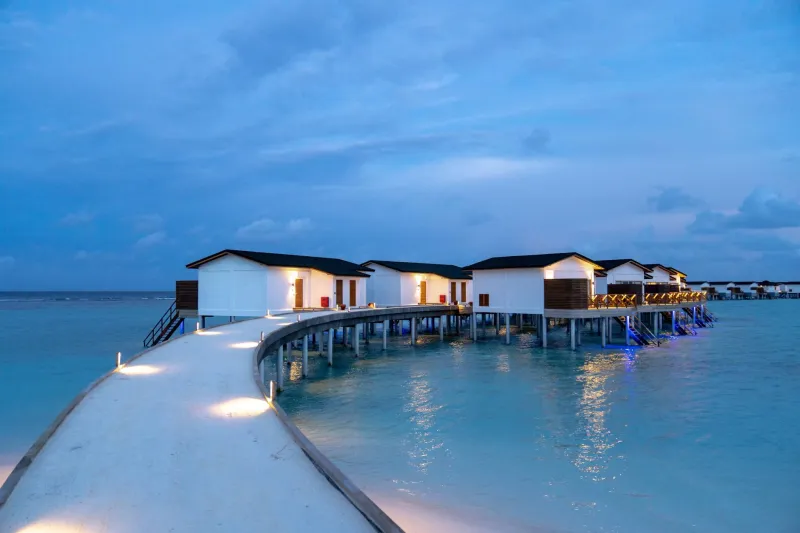
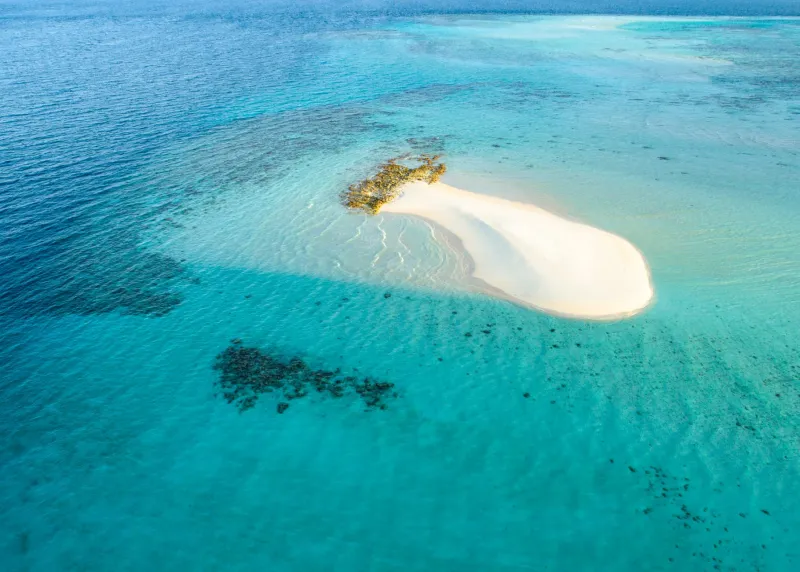
There is a particular kind of stillness that descends over Kanuhura after sunset. The Indian Ocean, already impossibly blue by day, begins its nightly transformation—microscopic organisms illuminating the shallows with a soft, electric glow that has no analog in the built world. No boardroom projection screen, no rooftop bar in Midtown, no private dining room in Chicago's financial district can approximate what happens here. And for a growing number of American executives and entrepreneurs, that distinction is precisely the point.
The question is no longer whether to conduct serious business outside the office. Research in behavioral economics and environmental psychology has long confirmed that setting shapes cognition. The more pressing question—the one that forward-thinking dealmakers are beginning to ask—is where, specifically, the conditions for high-stakes clarity are most reliably found.
Increasingly, the answer points toward Kanuhura.
The Psychology of Displacement
When American executives describe their most important business breakthroughs, the setting is rarely a conference room. It is a walk taken between meetings, a dinner that ran long, a flight where the absence of connectivity forced a different quality of thought. What these moments share is displacement—a deliberate removal from the environment where pressure accumulates and cognitive load becomes its own obstacle.
Kanuhura, situated in Lhaviyani Atoll and accessible by a scenic seaplane journey from Malé, offers something more intentional than accidental displacement. It offers designed distance. The resort occupies its own private island, meaning that the ordinary intrusions of professional life—the open-plan office, the back-to-back calendar, the ambient noise of ambition—are structurally absent. What fills that space instead is something that behavioral scientists refer to as restorative environment: a setting so fundamentally different from the stress-inducing norm that the brain's executive function begins, almost involuntarily, to recover.
Restored executive function means sharper judgment. It means a reduced tendency toward cognitive shortcuts and reactive decision-making. For the American entrepreneur navigating a complex acquisition or the C-suite executive preparing for a pivotal partnership discussion, this is not an amenity. It is a competitive advantage.
Why the Table Matters as Much as the Terms
Kanuhura's private dining experiences are among the most architecturally arresting in the Maldives. Imagine a table set at the water's edge as the bioluminescent tide begins to stir—the kind of setting that requires no manufactured ambiance because the Indian Ocean provides its own. Guests dine beneath open sky, attended by staff who understand that the highest form of hospitality is knowing precisely when to be present and when to recede.
This setting does something specific to the social dynamics of negotiation. Shared wonder—the kind that a genuinely extraordinary environment produces—is one of the most reliable accelerants of interpersonal trust. Psychologists call this awe-induced prosociality: the documented tendency of people who experience awe together to feel more connected, more generous in their assumptions about others, and more willing to engage in the kind of vulnerability that authentic agreement requires.
For American executives accustomed to the transactional choreography of business dinners in familiar cities, the bioluminescent shoreline at Kanuhura introduces a variable that no amount of preparation can manufacture: genuine shared experience. When both parties at the table have never seen anything quite like what they are witnessing together, the conversation that follows tends to be different in character. More honest. More exploratory. More conducive to the kind of trust that turns a signed term sheet into a durable relationship.
The Architecture of Thinking Space
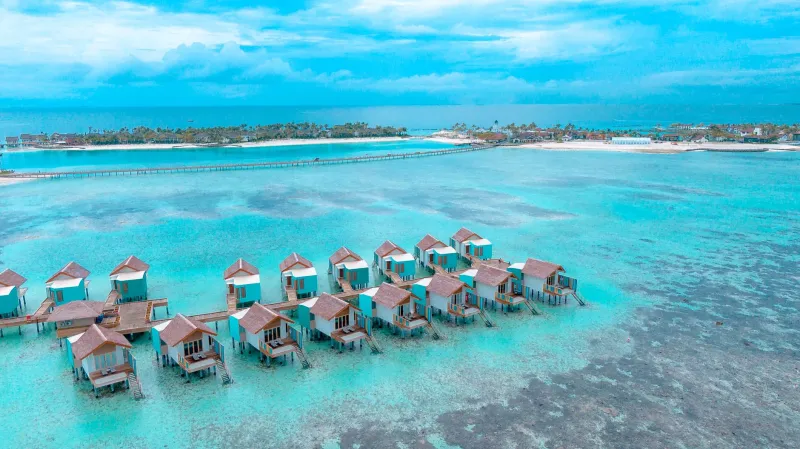
Beyond the dining experience itself, Kanuhura's overwater villas provide a working environment that no urban hotel suite can replicate. Each villa extends over the lagoon on a private deck, offering unobstructed sightlines across water that shifts from turquoise to cobalt across the course of a single afternoon. The absence of visual clutter—no skyline, no street traffic, no competing architectural information—allows the prefrontal cortex to operate with a quality of focus that is genuinely difficult to achieve in the urban environments where most American executives spend their professional lives.
This is not a claim about relaxation. It is a claim about performance. The distinction matters. Kanuhura is not a place to disengage from consequential thinking; it is a place where consequential thinking becomes more capable of reaching its own conclusions. The executive who arrives with a complex problem—a partnership structure that has resisted resolution, a strategic pivot that requires a clearer frame—often finds that the Indian Ocean has a way of making the answer more legible.
The resort also offers dedicated spaces for private meetings, seamlessly integrated into the broader guest experience so that the transition between strategic conversation and the restorative environment around it requires no effort at all. The infrastructure for serious work is present. What Kanuhura adds is the context that makes serious work more productive.
Entertaining With Intention
For American executives who host clients or partners at Kanuhura, the experience itself becomes part of the proposition. In a professional culture where access and discernment signal credibility, bringing a key relationship to an environment as singular as this one communicates something that no expense account dinner in a familiar city can. It signals that you understand the value of the exceptional—and that you are willing to invest in it on behalf of the people who matter to your enterprise.
Kanuhura's concierge team works directly with guests to design itineraries that balance the demands of professional engagement with the full breadth of what the island offers: private snorkeling excursions over the house reef, sunset cruises across the atoll, spa treatments drawn from ancient Indian Ocean wellness traditions. Each of these experiences, shared with a client or collaborator, deepens the relational foundation on which lasting business is built.
The Competitive Calculus
The traditional logic of business travel prioritizes proximity and convention: the deal gets done in the city where the principals already are, in the format that everyone already knows. This logic is efficient. It is also, increasingly, insufficient for the kinds of relationships and decisions that define long-term competitive success.
The executives who are choosing Kanuhura for high-stakes conversations are not abandoning rigor. They are adding an environment capable of meeting the full complexity of what they are trying to accomplish. They understand that the most important variable in any negotiation is the quality of thinking that each party brings to the table—and that the Indian Ocean, at its bioluminescent best, has a way of raising that quality in ways that no conference room ever will.
The deal you have been trying to close may not need a better argument. It may simply need a better table.