What the Indian Ocean Actually Does to Your Body: The Surprising Physiology Behind Kanuhura's Healing Waters
More Than a Pretty Postcard
America runs on exhaustion. Between relentless work schedules, screen saturation, and the ambient noise of modern life, the average professional arrives at a vacation destination carrying a physiological debt that no airport lounge or hotel minibar can begin to address. The question worth asking, then, is not simply where to go—but what environment is actually capable of reversing the damage.
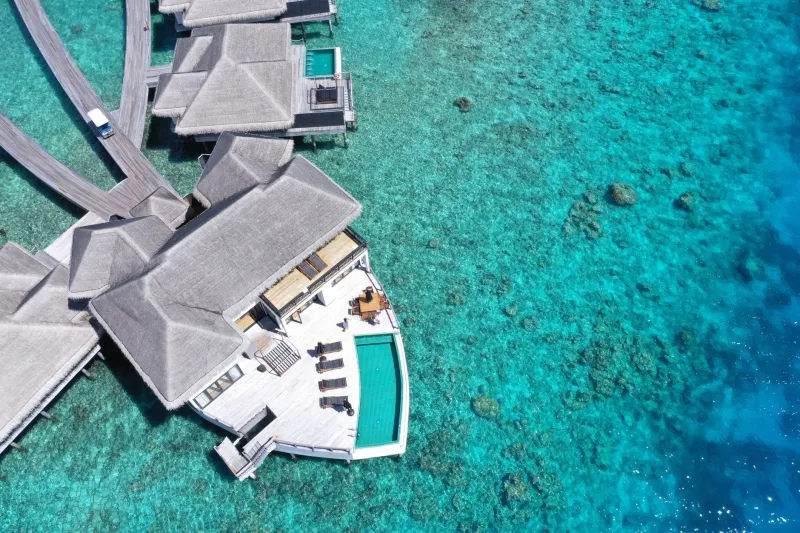
The lagoons at Kanuhura Maldives offer an answer that goes well beyond aesthetic appeal. The waters surrounding this private island in Lhaviyani Atoll are not passive backdrops for photographs. They are chemically complex, thermally precise, and biologically rich environments that interact with the human body in ways that researchers in marine biology, balneology, and environmental psychology have spent decades attempting to quantify. What they have found is striking.
The Mineral Profile of the Indian Ocean
Seawater is not a uniform substance. Its therapeutic potential varies considerably depending on geographic location, depth, and the surrounding ecosystem. The Indian Ocean, and specifically the warm, shallow lagoons of the Maldivian atolls, possesses a mineral composition that distinguishes it from temperate or colder ocean environments.
Magnesium is perhaps the most therapeutically significant element present. The Indian Ocean carries elevated concentrations of magnesium chloride, a compound that is readily absorbed through the skin during prolonged immersion. Magnesium plays a central role in regulating the nervous system, reducing cortisol production, and supporting muscular recovery. For individuals arriving with the elevated stress hormones that characterize chronic overwork, this transdermal absorption offers a direct biochemical intervention—one that no oral supplement can replicate with the same efficiency.
Beyond magnesium, the waters contain meaningful concentrations of potassium, calcium, and trace iodine. Potassium supports cellular hydration and cardiovascular function. Calcium contributes to bone density and nerve transmission. Iodine, absorbed in small quantities through both the skin and respiratory exposure to sea air, supports thyroid regulation—a system frequently disrupted in individuals with high-stress lifestyles. The cumulative effect of daily immersion in these waters is a gentle but persistent recalibration of systems that urban life consistently depletes.
Temperature as Therapy
The lagoon waters at Kanuhura maintain an average temperature between 82 and 86 degrees Fahrenheit throughout the year. This range is not incidental—it corresponds almost precisely to what researchers describe as thermoneutral immersion, the temperature zone in which the body neither works to generate heat nor expends energy on cooling.
This thermal neutrality has a cascade of physiological effects. The cardiovascular system relaxes. Peripheral blood vessels dilate, improving circulation to the extremities and facilitating the removal of metabolic waste products from muscle tissue. The parasympathetic nervous system—the branch responsible for rest, digestion, and cellular repair—becomes dominant. In practical terms, the body shifts from a state of sustained vigilance into one of active recovery.
This is distinct from what a heated indoor pool or spa bath can achieve. Controlled environments replicate the temperature, but they cannot replicate the pressure dynamics, the microbial diversity, or the sensory complexity of open-water immersion. The gentle hydrostatic pressure of the ocean against the body also acts as a form of passive compression therapy, supporting lymphatic drainage and reducing the peripheral edema that accumulates during long-haul flights—a relevant consideration for guests traveling from the continental United States.
The Neuroscience of Blue Space
Marine biologists and environmental psychologists have developed a substantial body of research around what is now commonly referred to as "blue space"—the measurable psychological and neurological effects of proximity to large bodies of water. Studies conducted across multiple institutions, including work published in the journal Health and Place, have documented reductions in self-reported anxiety, improvements in mood, and decreases in physiological stress markers among individuals who spend regular time near or in coastal water environments.
The mechanisms are multiple. The rhythmic visual and auditory stimulation of moving water activates the default mode network in the brain—the same neural circuitry engaged during meditation and deep rest. The negative ion concentration in ocean air, elevated by wave action and evaporation, has been associated with increased serotonin availability. The broad, unobstructed horizon characteristic of an atoll lagoon engages what researchers describe as soft fascination, a low-demand form of attention that allows the prefrontal cortex to recover from the directed attention fatigue that accumulates during extended periods of knowledge work.
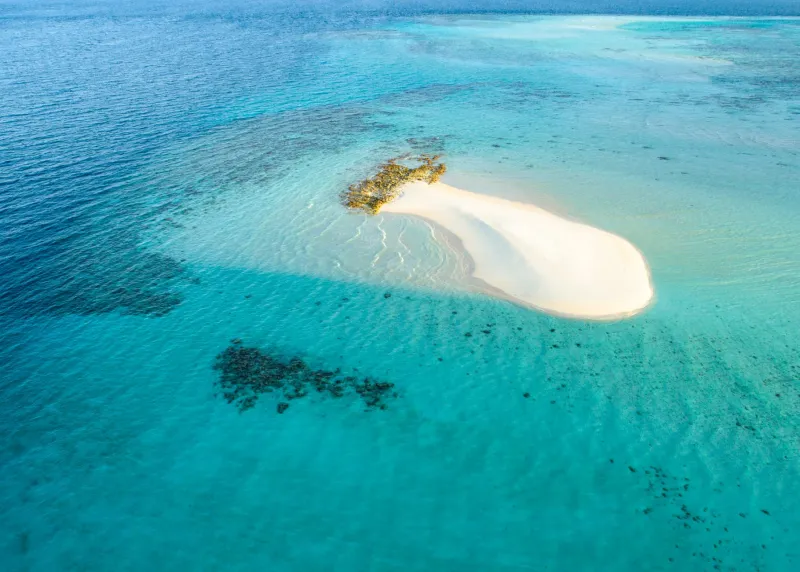
At Kanuhura, these conditions are present in an unusually concentrated form. The atoll geography creates a lagoon that is simultaneously expansive and sheltered—offering the visual breadth associated with psychological restoration while maintaining the calm surface conditions that allow for effortless immersion.
Marine Biodiversity and the Immune System
The reef ecosystems adjacent to Kanuhura's shores introduce an additional dimension that is rarely discussed in the context of luxury travel. Exposure to marine biodiversity—the complex microbial communities associated with healthy coral reef environments—has been linked in emerging research to beneficial modulation of the human immune system.
The hygiene hypothesis and its more recent successor, the biodiversity hypothesis, suggest that the modern Western immune system is chronically understimulated by the microbially impoverished environments in which most Americans live and work. Exposure to diverse natural ecosystems, including marine environments, provides the immune system with a form of recalibration that may reduce inflammatory responses associated with chronic stress, allergic conditions, and autoimmune dysregulation.
Snorkeling and diving in the reef waters surrounding Kanuhura thus offer more than recreational value. They represent genuine contact with one of the planet's most biologically diverse ecosystems—an encounter that, according to current immunological research, the human body is designed to benefit from.
What This Means for the American Traveler
The United States leads the developed world in rates of burnout, sleep disorder, and stress-related cardiovascular disease. Americans take fewer vacation days than citizens of any other wealthy nation and report higher rates of work-related anxiety than their counterparts in Europe or Australia. The physiological toll of this pattern is well documented; less well understood is what genuine environmental intervention looks like.
Kanuhura's lagoons do not offer a metaphorical escape. They offer a chemically, thermally, and neurologically distinct environment that acts on the human body through mechanisms that researchers are only beginning to fully map. The warm mineral water, the thermoneutral immersion, the sensory breadth of the atoll horizon, the biodiversity of the reef—each element contributes to a process of restoration that is measurable, not merely felt.
The science, in other words, justifies the journey.