Beyond the Training Facility: How America's Elite Athletes Are Discovering Peak Performance in the Indian Ocean

For decades, the image of an elite athlete in recovery has looked remarkably similar: a sterile sports medicine clinic, a chlorinated lap pool, a foam roller on a gymnasium floor. Efficient, perhaps. Inspiring, hardly. A quiet shift is underway, however, and it is drawing the most disciplined competitors in American sports toward an entirely different kind of training environment — one defined not by fluorescent lighting and protein shake dispensers, but by the luminous turquoise waters of the North Malé Atoll.
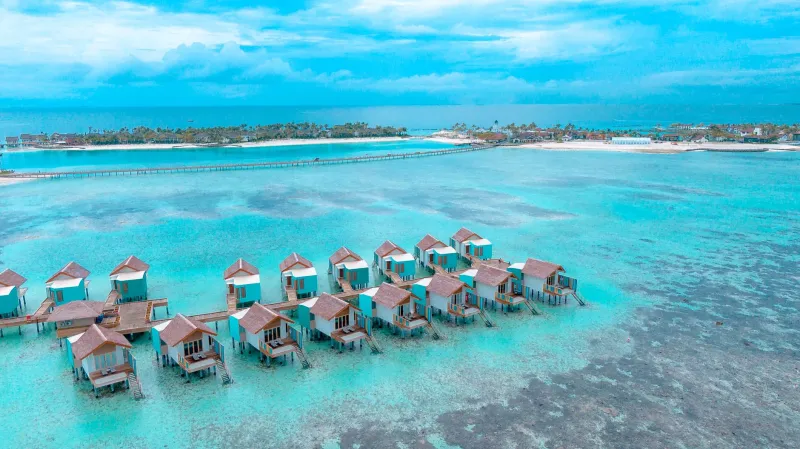
Kanuhura Maldives, long celebrated among discerning travelers for its uncompromising luxury and extraordinary isolation, is earning an equally fervent following among professional athletes, Olympic-caliber fitness competitors, and the performance-obsessed executives who train alongside them. The reasons, it turns out, are grounded as much in physiology as they are in the undeniable appeal of waking up to a horizon that stretches without interruption toward the edge of the world.
The Thermal Advantage: What Warm Water Does That Cold Plunge Tanks Cannot
American sports culture has embraced cold water immersion with near-evangelical enthusiasm. Ice baths, cryotherapy chambers, and cold plunge protocols have become standard fixtures in professional locker rooms from Boston to Los Angeles. The physiological rationale is sound — cold immersion reduces acute inflammation and accelerates the clearance of metabolic byproducts following intense exertion.
What receives considerably less attention, however, is the complementary role of warm water therapy in a comprehensive recovery protocol. The Indian Ocean surrounding Kanuhura maintains a consistent surface temperature between 82 and 86 degrees Fahrenheit throughout much of the year — a thermal range that promotes profound muscular relaxation, enhances peripheral circulation, and facilitates the kind of parasympathetic nervous system activation that cold immersion, by its very nature, cannot replicate.
Physical therapists and sports scientists increasingly describe this warm-water state as an optimal window for mobility work, breath training, and active recovery movement. When athletes perform these practices in open ocean rather than a rehabilitation pool, the addition of gentle natural resistance, uneven aquatic terrain, and the psychological stimulation of an expansive natural environment creates a recovery stimulus that no facility can manufacture artificially.
At Kanuhura, the lagoon itself becomes a therapeutic tool. Morning sessions in the shallows — unhurried, unstructured, and conducted against a backdrop of extraordinary natural beauty — have been described by visiting athletes as among the most restorative experiences of their competitive careers.
Isolation as a Performance Variable
The most sophisticated coaches in American sport have long understood something that mainstream fitness culture is only beginning to acknowledge: the central nervous system does not distinguish between the stress of a heavy training load and the stress of a crowded schedule, a buzzing inbox, or the ambient noise of a city that never fully quiets.
Cortisol, the body's primary stress hormone, responds to psychological and environmental stimuli with the same biochemical urgency it applies to physical exertion. An athlete who trains intensely while simultaneously managing the cognitive and emotional demands of daily professional life is, in measurable terms, training in a state of chronic hormonal compromise.
Kanuhura's geographic position — a private island accessible only by seaplane from Velana International Airport — creates a form of enforced disconnection that no urban wellness retreat can authentically replicate. There are no traffic patterns to navigate, no news cycles to monitor, no ambient pressures bleeding through the walls of a hotel in a major metropolitan area. The island imposes a quietude that is not merely pleasant but genuinely restorative at a neurological level.
Athletes who arrive at Kanuhura carrying the accumulated stress load of a competitive season frequently report a measurable shift in sleep quality within the first 48 hours — deeper sleep cycles, more vivid dreaming, and a morning alertness that feels qualitatively different from anything a supplement stack has ever produced. This is not incidental. It is the predictable consequence of removing the nervous system from a state of chronic low-grade activation.
Structured Recovery, Unstructured Excellence
Kanuhura does not position itself as a sports performance facility, and that distinction matters. There are no mandatory training schedules, no performance assessments administered at check-in, no coaching staff waiting with clipboards. What the resort offers instead is something more valuable: the conditions under which elite performers rediscover their relationship with movement for its own sake.
The water sports program provides access to kayaking, stand-up paddleboarding, snorkeling, and freediving — activities that develop balance, breath control, and full-body coordination while remaining entirely divorced from the metrics-driven intensity of competitive training. The resort's spa incorporates treatments informed by traditional Maldivian healing practices, many of which address soft tissue recovery with a sophistication that complements rather than duplicates Western sports medicine approaches.
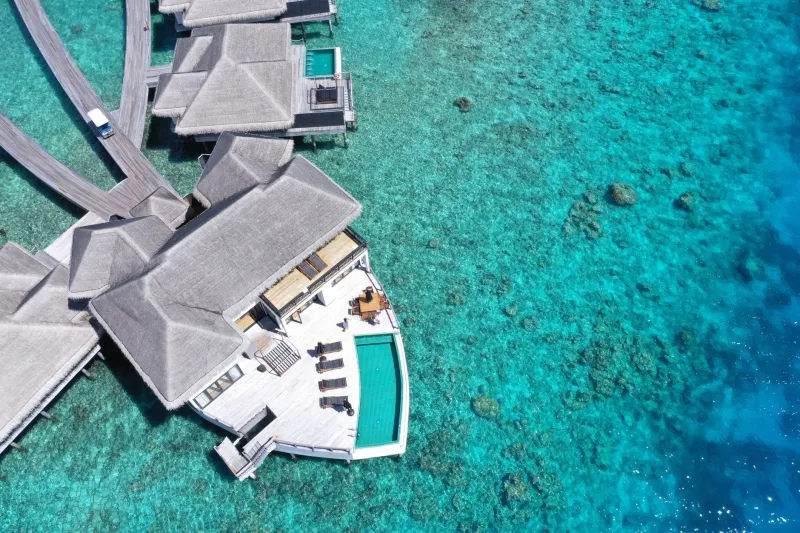
For those who prefer structured movement, the fitness facilities are equipped to a standard commensurate with Kanuhura's overall commitment to excellence. But the prevailing philosophy of the island encourages athletes to spend at least a portion of each day moving through its natural landscape without agenda — walking the beach at low tide, swimming in the lagoon at dusk, practicing breathwork on a private overwater terrace as the sun descends toward the Indian Ocean.
These unstructured hours, counterintuitively, are frequently where the most significant performance insights occur. Distance from competition and routine creates the cognitive space in which athletes recalibrate their motivation, reassess their goals, and return to their sport with a clarity of purpose that structured training camps rarely produce.
The Metrics That Matter Most
The conversation around athletic performance has grown increasingly sophisticated in its embrace of recovery as a primary training variable rather than an afterthought. Heart rate variability, sleep architecture, resting cortisol levels, and subjective readiness scores are now tracked with the same rigor applied to speed, strength, and power output.
By every one of these measures, the environment Kanuhura provides represents a meaningful performance advantage. The combination of warm-water immersion, genuine isolation, exceptional nutrition, and restorative sleep — experienced within a setting of extraordinary natural beauty that itself elevates mood and reduces psychological tension — creates a recovery stimulus of a kind that no urban training facility, however well-equipped, can replicate.
America's elite athletes have always sought the marginal gains that separate great from exceptional. An increasing number of them are finding those gains not in a new training protocol or an advanced recovery device, but in the singular experience of a private island in the Indian Ocean where the only agenda is the restoration of the body and mind that competition demands so much of.
The traditional training retreat will always have its place. But for those who have experienced what Kanuhura offers, returning to a gymnasium feels like settling for something considerably less than what peak performance actually requires.