Disconnected to Lead Better: How the World's Most Effective Executives Are Finding Strategic Clarity in the Maldives
For decades, the unwritten rule of American corporate culture has been deceptively simple: the most important person in the room is always reachable. The corner office, the open calendar, the perpetual proximity to crisis—these have long served as the visible symbols of executive authority. To step away, even briefly, was to risk appearing disengaged, replaceable, or worse, irrelevant.
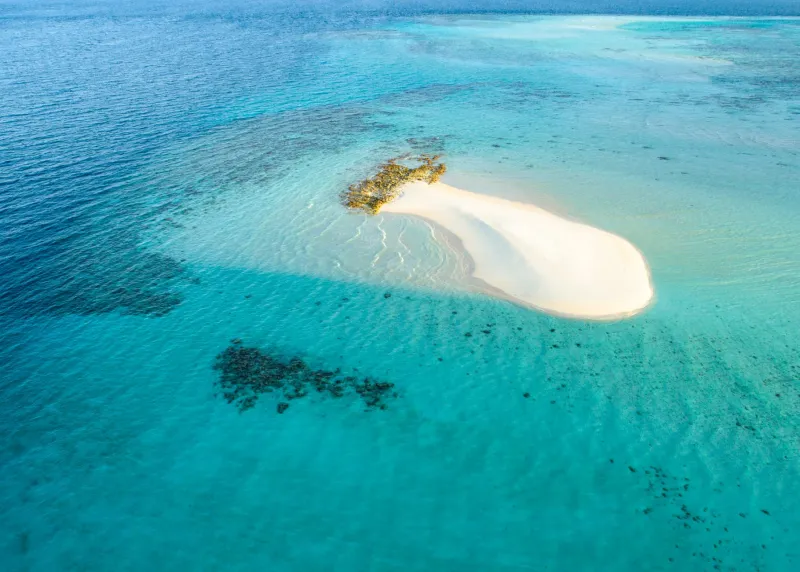
But something is shifting in the upper echelons of American business. Quietly, without press releases or LinkedIn announcements, a cohort of chief executives, managing directors, and board-level strategists have begun making an unusual pilgrimage—not to Silicon Valley retreats or Aspen leadership summits, but to a small coral island in the Indian Ocean, where the nearest traffic jam is a school of reef fish and the only interruption to silence is the rhythm of the tide.
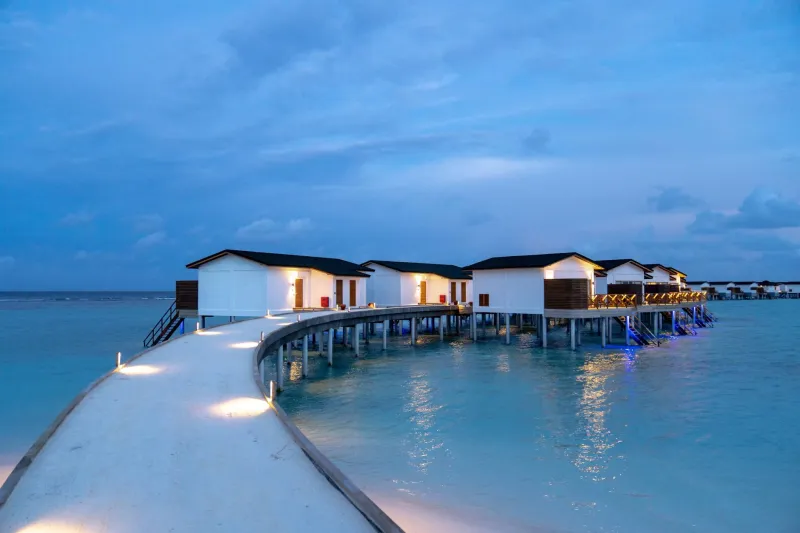
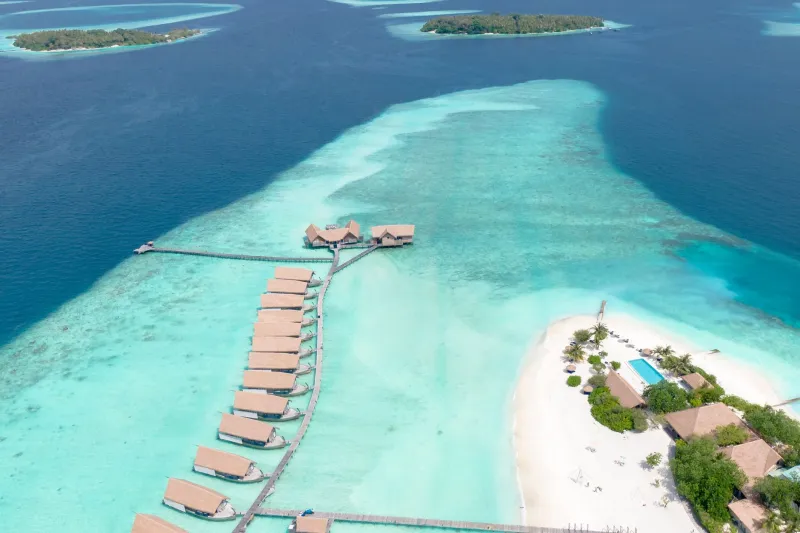
Kanuhura Maldives, situated in the pristine Lhaviyani Atoll, has become something of an open secret among those who lead at the highest levels. What draws them is not merely the obvious appeal of overwater villas and private beaches—though those are, by any measure, extraordinary. What draws them is something considerably more consequential: the capacity to think.
The Cognitive Cost of Constant Availability
Research in organizational psychology has long documented what many executives feel but rarely admit: the modern leadership environment is cognitively hostile. Notifications, escalations, back-to-back meetings, and the cultural expectation of instantaneous response do not sharpen executive judgment—they erode it. Decision fatigue is not a metaphor. It is a measurable neurological phenomenon that accumulates across the American workweek like sediment, dulling the very faculties that distinguish exceptional leaders from adequate ones.
The irony is profound. The leaders most responsible for navigating complexity are often operating in environments least conducive to complex thought.
Several executives who have spent extended time at Kanuhura describe a consistent experience: the first two days feel almost uncomfortable. The inbox silence registers as absence rather than relief. The body remains in a posture of anticipation, waiting for the next emergency that does not arrive. And then, gradually, something recalibrates.
"By the third morning, I was thinking about a structural problem in our organization that I hadn't been able to see clearly in eighteen months," recounted one chief operating officer from a major financial services firm, who requested anonymity in keeping with the discretion that characterizes Kanuhura's clientele. "I wasn't trying to solve it. I was snorkeling. And the answer simply appeared."
What Kanuhura Provides That No Boardroom Can
The resort's design is not accidental in this regard. Kanuhura's architecture and philosophy are built around what the property refers to as purposeful seclusion—an environment engineered not for distraction but for depth. The island's 100 villas and beach residences are positioned to maximize privacy without sacrificing access to the natural environment. Meals are unhurried. The spa draws on ancient healing traditions that are as attentive to mental restoration as physical renewal. The surrounding reef system offers encounters with marine life that are, by any clinical standard, genuinely awe-inducing.
Awe, it turns out, matters enormously to executive performance. Studies from the University of California have demonstrated that experiences of awe—defined as encounters with phenomena that exceed one's existing frameworks—produce measurable reductions in self-referential thinking and measurable increases in big-picture cognition. The Indian Ocean, in this sense, is not a backdrop. It is a catalyst.
Kanuhura's activities director notes that many guests who arrive identifying as executives leave identifying as something closer to strategists. The distinction is meaningful. Executives manage what is in front of them. Strategists perceive what is not yet visible. The former requires proximity to operations. The latter requires distance from them.
The Delegation Dividend
There is a secondary benefit to extended absence that many leaders discover only in retrospect: their teams perform better without them.
This is not a comfortable truth for those whose professional identity is bound to indispensability. But the pattern is consistent. When a chief executive is genuinely unreachable—not in the performative, boundary-setting sense, but truly present elsewhere—organizations are forced to develop the decision-making musculature that over-reliance on top leadership has atrophied. Problems get solved. Judgment gets exercised. Confidence accumulates at levels where it is most needed.
Several leaders who have returned from Kanuhura describe discovering, upon reentry, that the organizational changes they had been attempting to implement for years had quietly taken root in their absence. Freed from the gravitational pull of the corner office, their teams had simply figured it out.
"I came back to find that two of my direct reports had resolved a client situation I would have personally managed," said one CEO who spent ten days at the resort following a particularly demanding fiscal quarter. "And they resolved it better than I would have. That told me something important about what I had been inadvertently preventing."
Luxury as a Strategic Investment
For American executives accustomed to justifying every expenditure through a lens of return on investment, the calculus around a Kanuhura stay deserves honest examination. The resort occupies the uppermost tier of Maldivian hospitality—a designation earned through the quality of its accommodations, the caliber of its service, and the extraordinary natural setting it inhabits. It is not inexpensive.
But the question worth posing is not what a stay at Kanuhura costs. The question is what chronic cognitive depletion costs—in poor decisions, in missed opportunities, in the slow erosion of the strategic vision that distinguishes truly great organizations from merely competent ones. Framed in those terms, the investment calculus changes considerably.
The leaders who return from Kanuhura do not typically describe their time there as a luxury. They describe it as maintenance—the kind that high-performance systems require and that American corporate culture has conspired to make executives feel guilty for seeking.
A New Model of Executive Presence
The most significant shift that Kanuhura seems to catalyze is not in how executives think about vacation. It is in how they think about presence itself.
The traditional model equates leadership presence with physical proximity—being seen, being available, being in the building. What an extended stay in the Indian Ocean tends to reveal is that the most valuable form of executive presence is not spatial. It is cognitive. It is the quality of attention brought to the right problems at the right moments, undiluted by the noise that passes for productivity in most American organizations.
Kanuhura does not transform executives. It removes what has been obscuring them. The coral reefs, the open horizon, the unhurried passage of days unmarked by notifications—these do not add something new. They restore what was already there, waiting beneath the accumulated weight of a culture that has confused busyness with leadership.
For those willing to make the journey, the Indian Ocean offers something no conference room ever has: the silence in which genuinely important thinking becomes possible.