The Art of Knowing Before Being Asked: Inside Kanuhura's Philosophy of Anticipatory Service
There is a telling distinction that surfaces when you speak with guests who have stayed at both merely expensive resorts and genuinely exceptional ones. At the former, the service is correct. Requests are fulfilled promptly. The amenities are impeccable. The staff is polished and professional. Everything works.
At the latter, something stranger occurs. The thing you wanted appears before you articulated it. The adjustment you were about to request has already been made. The experience feels, in some hard-to-define way, as though it was assembled specifically for you — not from a template, but from genuine observation and care.
This is the distinction that defines Kanuhura Maldives, and it is worth examining closely, because it illuminates something important about the psychology of luxury that most resorts never fully grasp.
The Difference Between Service and Hospitality
The hospitality industry frequently conflates service with hospitality. They are not the same thing.
Service is transactional. It responds. A guest makes a request; the request is fulfilled. Done correctly, service is invisible in the best possible way — seamless, unobtrusive, efficient. Most luxury properties worldwide deliver excellent service. It is the baseline.
Hospitality is relational. It anticipates. It observes. It constructs an experience around the individual rather than around a standardized definition of luxury. It requires a fundamentally different orientation from staff — not the execution of protocols, but the cultivation of genuine attentiveness.
"The guest who tells you exactly what they want is, in a sense, the easier guest to serve," explains a senior member of Kanuhura's guest experience team. "The real craft is understanding what a guest wants before they have fully articulated it to themselves. That requires watching, listening, and remembering — across every interaction, from the first email inquiry to the moment they arrive at the jetty."
The Pre-Arrival Portrait
For Kanuhura's most discerning guests — many of them ultra-high-net-worth American travelers who have experienced the finest hotels on every continent — the experience of being genuinely known begins before the seaplane departs Malé.
The resort's pre-arrival process is, by design, more nuanced than a standard preference questionnaire. While guests are invited to share dietary requirements and occasion details, the more revealing information often arrives through less formal channels: the way an inquiry is phrased, the specific questions a guest asks, the traveling companion details that emerge in conversation with the reservations team.
A guest who asks about the quietest villa position is communicating something beyond a preference for privacy. A couple who mention a significant anniversary in passing are signaling an emotional context that the entire visit should honor. A traveling family that inquires about children's programming with unusual specificity is revealing both the children's interests and the parents' desire to feel genuinely seen as parents, not merely as revenue.
"We build what we internally call a portrait," says one of Kanuhura's senior concierge professionals. "Not a file. A portrait. Because a file is a collection of data points, and a portrait is a living understanding of a person. Those are very different things, and they produce very different experiences."
What Discerning Guests Expect But Never Request
Among the guests who return to Kanuhura year after year — and there are many — certain expectations are held with absolute consistency. None of them are ever formally communicated. They are simply understood to be the standard.
Temporal sovereignty. The most sophisticated travelers have spent decades having their time managed by others — assistants, schedules, obligations. At Kanuhura, they expect time to belong entirely to them. This means that staff never impose a rhythm, never suggest that a guest should be somewhere they have not chosen to be, and never allow operational logistics to intrude on the experience of pure presence. A sunset dinner does not begin because the kitchen is ready. It begins when the guest is.
The absence of performance. There is a particular quality of inauthenticity that ultra-experienced travelers detect immediately: the sense that staff are performing hospitality rather than embodying it. Kanuhura's culture actively resists this. The warmth that guests encounter is genuine, cultivated through a hiring philosophy that prioritizes emotional intelligence and natural curiosity over scripted professionalism.
Memory that spans visits. The returning guest who must re-explain that they prefer their coffee prepared a particular way, or that they do not drink alcohol, or that they prefer to dine late, experiences a subtle but unmistakable signal: they were not truly remembered. At Kanuhura, the institutional memory of a guest's preferences is treated as a form of respect — an acknowledgment that this individual's time and identity are worth preserving.
Cultural fluency without condescension. American guests at ultra-luxury international resorts often encounter one of two failure modes: staff who are so deferential that genuine connection is impossible, or staff who treat cultural differences as an occasion for unsolicited education. Kanuhura's team navigates this with rare sophistication — engaging authentically with American guests' frames of reference while gently expanding them, never making anyone feel provincial for what they do not know.
The Psychology of Feeling Chosen
What the most discerning guests are ultimately seeking — beneath the preference for specific pillow firmness and the expectation of remembering their cocktail order — is the experience of feeling genuinely chosen. Not selected from a demographic. Not identified as a high-value customer. Chosen as an individual, in all their particularity.
This is a profound psychological need, and one that is rarely met at the scale most luxury resorts operate. It requires a staff-to-guest ratio that permits genuine relationship. It requires a physical environment intimate enough that individual guests are not lost in a crowd. And it requires a leadership culture that communicates, at every level of the organization, that the guest in front of you is the most important person in the building.
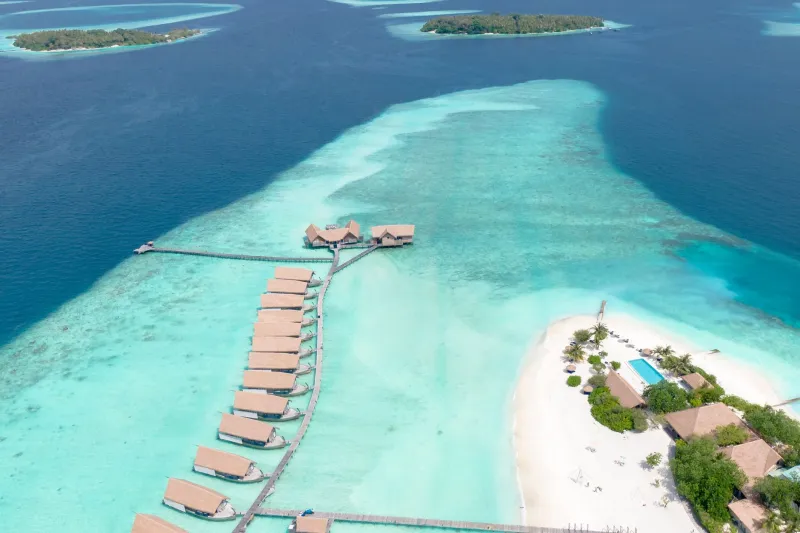
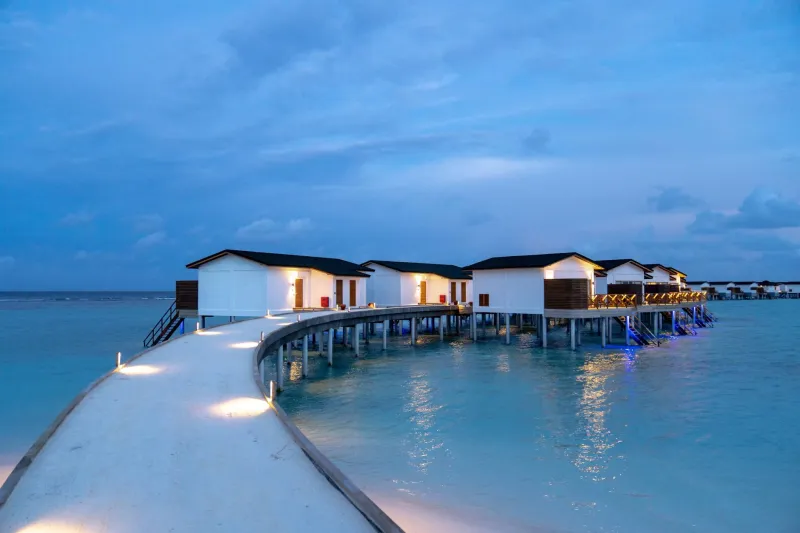
Kanuhura's private island setting — with its deliberately limited number of villas and its insistence on maintaining an atmosphere of exclusive intimacy — creates the structural conditions for this kind of hospitality to exist. But the structure alone does not produce the experience. The experience is produced by people who have internalized a particular understanding of what luxury actually means.
"Luxury is not the thread count or the champagne," reflects one of the resort's long-serving team members. "Those things are expected. Luxury is the moment when a guest realizes, without being able to say exactly why, that they are completely, genuinely cared for. That is the thing we are always working toward."
For the American traveler who has stayed in every five-star property the world has to offer, this is the distinction that ultimately determines where they return.