Invisible Wealth: Why the World's Most Powerful People Are Trading Visibility for Seclusion
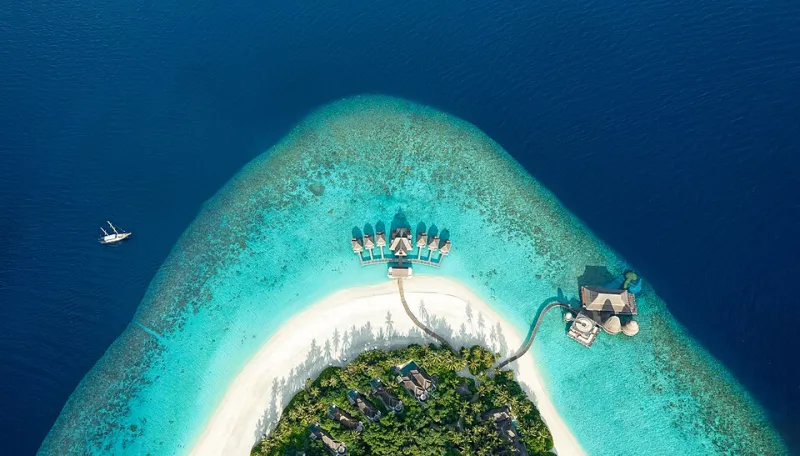
Photo: Matheenfaiz, CC BY-SA 4.0, via Wikimedia Commons
There was a time, not so long ago, when luxury announced itself. It arrived in the form of monogrammed luggage stacked conspicuously in hotel lobbies, in the deliberate flash of a watch face at a business dinner, in the careful selection of a resort brand whose name alone conveyed a particular social altitude. For decades, the architecture of extreme wealth was built on visibility. The more you were seen to have, the more you were presumed to matter.
That calculus has changed — quietly, decisively, and with the kind of conviction that tends to characterize genuinely significant cultural shifts.
Today, among the cohort that behavioral economists refer to as ultra-high-net-worth individuals — those with investable assets exceeding thirty million dollars — the most sought-after luxury is not something that can be featured in a magazine spread or catalogued on a social platform. It is, in the most literal sense, the opposite of spectacle. It is privacy. Genuine, uncompromised, architecturally enforced privacy.
The Psychology Behind the Pivot
Dr. Rachel Holloway, a consumer psychologist whose research focuses on luxury behavior among the American ultra-affluent, has spent the better part of a decade tracking what she describes as a "fundamental inversion" in the status economy. "For most of the twentieth century, luxury consumption was a signaling behavior," she explains. "You purchased things and experiences that other people could see, because the social validation those purchases generated was part of the product itself. What we're observing now is the decoupling of luxury from audience."
The reasons for this shift are layered. In part, it reflects a generational transition in wealth — the rise of founders and technology entrepreneurs who built their fortunes outside traditional social hierarchies and who have little appetite for the performance rituals of old-money culture. In part, it reflects a genuine security concern: as wealth becomes more visible through social media and digital footprints, the desire to protect both physical safety and personal information has intensified considerably.
But perhaps most significantly, it reflects a growing recognition among the truly successful that visibility itself has become a form of vulnerability. "When you've achieved a certain level," observes Marcus Feld, a luxury brand strategist who has advised some of the world's most recognized hospitality groups, "you begin to understand that attention is not an asset. It's a liability. The most powerful people in any room are almost never the loudest ones in it."
What Privacy Actually Costs — and Why That's the Point
In economic terms, privacy commands a premium precisely because it cannot be manufactured at scale. A hotel brand can build ten thousand rooms and still claim luxury. It cannot, by definition, offer ten thousand guests genuine seclusion. Exclusivity of access — not exclusivity of brand — has become the differentiating factor that the ultra-affluent are now willing to pay extraordinary sums to secure.
This is not a subtle distinction. It reshapes the entire decision architecture around how this demographic selects vacation destinations. The relevant questions are no longer "Is this property five-star?" or "Is this brand recognized?" They are: "How many other guests will share my experience?" "Can I move through this environment without being observed?" "Will my presence here be known?"
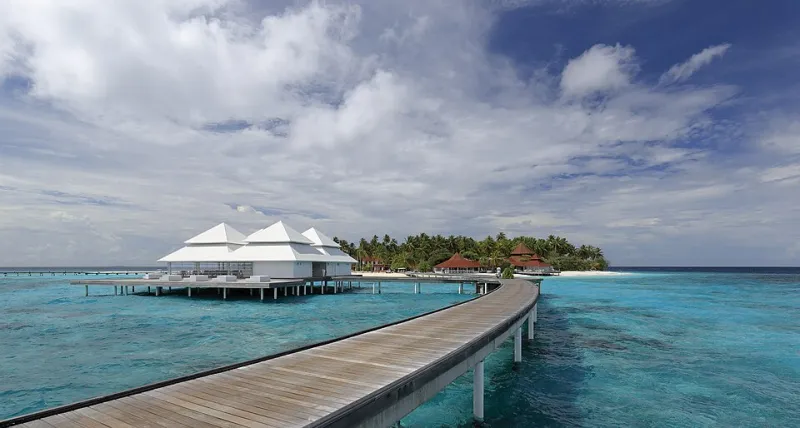
Kanuhura Maldives was designed, in its essential character, to answer those questions before they are even asked. Positioned on its own private island in the Lhaviyani Atoll — one of the more remote and deliberately understated of the Maldivian atolls — the resort maintains a guest-to-space ratio that makes genuine solitude not merely possible but structurally inevitable. The island's geography does what no velvet rope or confidentiality agreement can fully accomplish: it places natural distance between a guest and the rest of the world.
The Architecture of Discretion
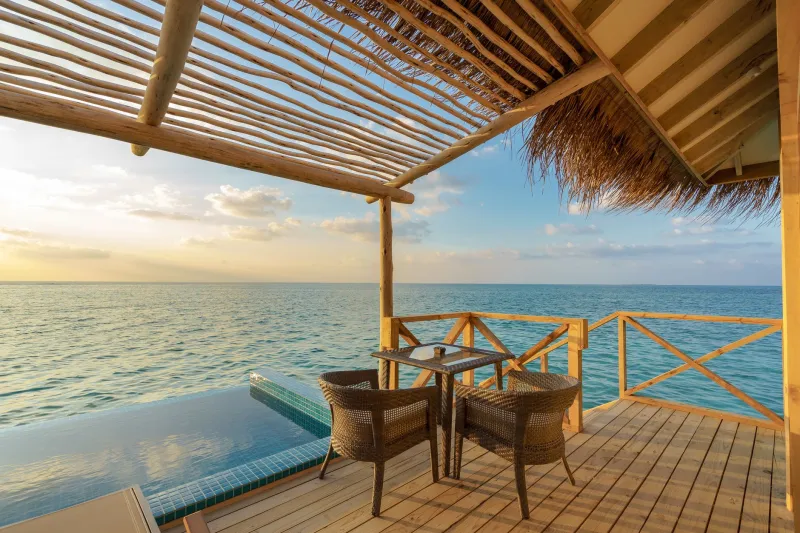
What distinguishes Kanuhura's approach to privacy is that it operates at every level of the guest experience simultaneously. It is not simply a matter of remote location, though the remoteness is real and meaningful. It is embedded in the physical design of the villas — each positioned to eliminate sightlines to neighboring structures, each oriented to face the ocean rather than communal spaces. It is present in the staffing philosophy, which emphasizes anticipatory service over intrusive attentiveness, and in the operational protocols that ensure guest information never circulates beyond the essential team responsible for that guest's stay.
For the kind of traveler who has spent years managing their public profile with extraordinary precision — the CEO who weighs every public statement, the founder whose movements are tracked by financial media, the public figure who has not experienced genuine anonymity in years — this level of structural privacy is not an amenity. It is the entire reason for the journey.
Seclusion as Strategic Investment
Luxury brand strategists who work with ultra-high-net-worth clients note that the shift toward privacy-as-status has also changed the economics of how this demographic thinks about vacation spending. Where conspicuous luxury was once justified partly by its social return — the stories it generated, the conversations it enabled, the image it reinforced — private luxury must justify itself on entirely different terms.
"These guests are not paying for a photograph or a story they'll tell at a dinner party," says Feld. "They're paying for an experience that exists entirely for themselves. That requires a different kind of confidence — both in the destination and in one's own sense of what value actually means."
At Kanuhura, that value proposition is built on the understanding that the most restorative experiences are often the least performative ones. The private reef excursion that no one else will ever know about. The sunset observed from a villa terrace in complete solitude. The dinner prepared specifically for one couple on a stretch of beach where the nearest other human being is half a mile away.
These are not experiences designed to be shared. They are designed to be felt — which, for the world's most scrutinized and least private individuals, may be the most radical luxury of all.
The New Status Symbol Has No Logo
Perhaps the most telling indicator of how thoroughly this shift has taken hold is what the ultra-affluent are no longer asking for. Requests for branded experiences, for visible markers of tier or category, for the kind of social proof that once defined luxury hospitality — these have given way to something far more elemental. What the most discerning guests now seek is the experience of being, for a few days, entirely unknown.
That is not a small thing to offer. In a world where virtually every movement of the successful can be tracked, analyzed, and reported upon, genuine invisibility is among the rarest commodities available at any price. Kanuhura, by virtue of its location, its design, and its institutional commitment to discretion, offers something that no amount of brand prestige or five-star rating can replicate.
The billionaire's playbook, it turns out, has been quietly rewritten. And its most important chapter contains no photographs at all.